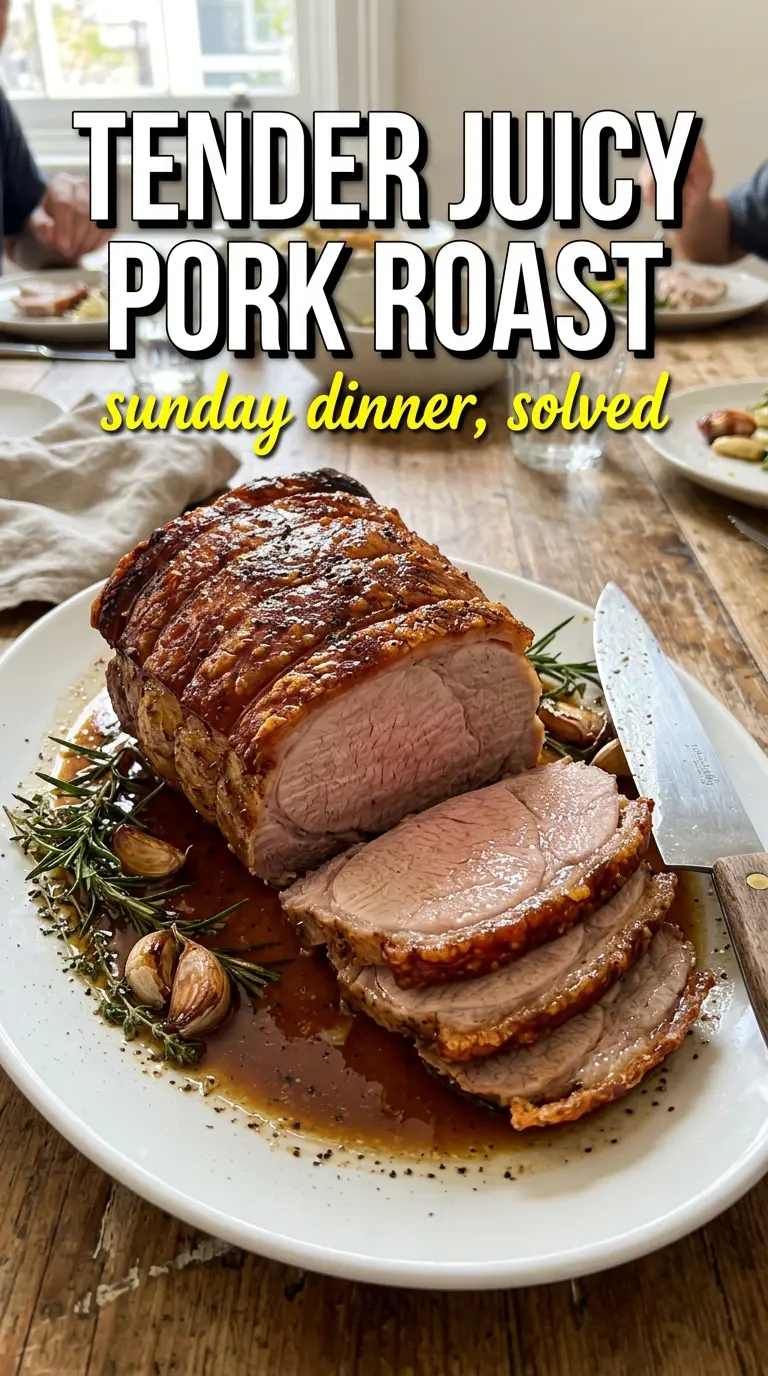
Golden crust, juicy slices, and pan drippings worth spooning over every bite are what make a pork roast worth putting on the table. The best versions stay moist all the way through instead of turning dry at the center, and this one does that without requiring a fussy brine or a long ingredient list.
The trick is a garlic-herb paste that clings to the meat and seasons the outside deeply before it ever goes into the oven. Searing first builds flavor fast, and a little chicken broth in the pan keeps the drippings from scorching while helping the roast finish gently. That combination gives you a browned exterior and a sliceable, juicy interior instead of one or the other.
Below, I’ve included the small details that matter most: how to avoid overcooking lean pork loin, what to watch for when it’s time to pull it from the oven, and a few smart ways to change up the seasoning without losing that tender result.
The herb crust turned out beautifully browned and the roast stayed juicy all the way through. I let it rest the full 15 minutes and the slices were perfect, not watery at all.
Like this tender juicy pork roast? Save it to Pinterest for the nights when you want a browned herb crust and clean, juicy slices.
The Reason Pork Loin Stays Dry When It Doesn’t Have To
Pork loin is lean, and lean cuts don’t forgive guesswork. The usual mistake is cooking it until the center looks “safe” by eye, which usually means you’ve already pushed past the point where the meat stays juicy. A roast like this wants a fast sear for flavor, then a gentle finish in the oven so the juices stay put instead of running onto the cutting board.
The other piece people miss is resting. If you slice right away, those juices flood out before they can settle back into the meat. Fifteen minutes isn’t wasted time here; it’s part of the recipe. That pause is what gives you those clean, moist slices instead of a dry middle and a wet board.
What the Herb Paste and Pan Broth Are Doing Here
- Olive oil — This carries the garlic and herbs across the roast and helps the paste cling. A neutral oil works in a pinch, but olive oil brings better flavor and helps the crust brown more evenly.
- Garlic, rosemary, and thyme — These are the backbone of the crust. Fresh herbs can be swapped in if that’s what you have, but dried herbs work well here because they hold up to the high heat and spread through the paste without turning soggy.
- Smoked paprika — This adds color and a little warmth without making the roast taste smoky in a heavy-handed way. If you don’t have it, regular paprika is fine, but you’ll lose some of that deep reddish-gold finish.
- Chicken broth — The broth protects the drippings from burning and gives you something worth spooning over the sliced pork. Water will keep the pan from scorching, but it won’t give the same savory finish.
- Boneless pork loin roast — This cut is lean and benefits from careful cooking. If you use pork tenderloin instead, it will cook faster and need close attention so it doesn’t overshoot 145°F.
Getting the Roast Brown Outside Without Losing the Juices Inside
Mixing the Paste
Stir the olive oil, garlic, rosemary, thyme, paprika, onion powder, salt, and pepper into a thick paste, not a thin dressing. You want something that sticks in a visible layer on the roast instead of sliding off into the pan. If the garlic pieces look loose and dry, add a touch more oil. That paste is doing the heavy lifting for flavor, so don’t rush this part.
Searing the Surface
Pat the pork completely dry before it hits the pan. Moisture on the outside keeps the crust from forming, and you’ll hear the difference right away: dry meat sizzles sharply, wet meat steams. Sear each side until you get a deep golden color, about 2 to 3 minutes per side. If the pan starts smoking hard, lower the heat a bit before the garlic in the paste burns.
Roasting to 145°F
After the broth goes in, transfer the pan to the oven and roast until the center reaches 145°F. Use an instant-read thermometer and check the thickest part of the roast, not the ends. Pull it at temperature, not after it sits there for several extra minutes, because carryover heat will finish the job during resting. If you wait until the oven temp seems “fully done,” the pork will overcook before you even get to slice it.
Resting and Slicing Cleanly
Let the roast rest for 15 minutes before cutting. During that time, the juices settle back into the meat and the fibers relax, which is why the slices hold together instead of shredding. Slice against the grain for the most tender bite, then spoon the pan juices over the top. That last spoonful is what makes this taste finished instead of just cooked.
How to Change the Seasoning Without Losing the Tender Texture
Dairy-Free and Naturally Gluten-Free
This roast already fits both of those needs as written. Just check your chicken broth if you’re buying a boxed version, since some brands add wheat-based flavoring. The method stays exactly the same, and you won’t lose anything in texture.
Make It More Herb-Forward
Swap in fresh rosemary and thyme if you have them, using about three times the amount of dried herbs. Chop them finely so they spread through the oil evenly and don’t burn in big woody bits. The flavor will taste brighter and a little more garden-fresh.
Use Pork Tenderloin Instead
Tenderloin works if that’s what you have, but it cooks much faster and dries out sooner. Start checking early and expect a shorter oven time. You’ll get a leaner, more delicate slice, though the roast won’t have quite the same thick, carved-dinner feel as pork loin.
Storage and Reheating
- Refrigerator: Store sliced pork in an airtight container for up to 4 days. Keep some of the pan juices with it so the meat doesn’t dry out in the fridge.
- Freezer: It freezes well for up to 2 months. Wrap slices tightly and freeze with a little broth or pan juice in the bag to help protect the texture.
- Reheating: Warm gently in a covered skillet or in the oven at 300°F with a splash of broth. High heat is the fastest way to turn leftover pork from juicy to chalky.
Answers to the Questions Worth Asking
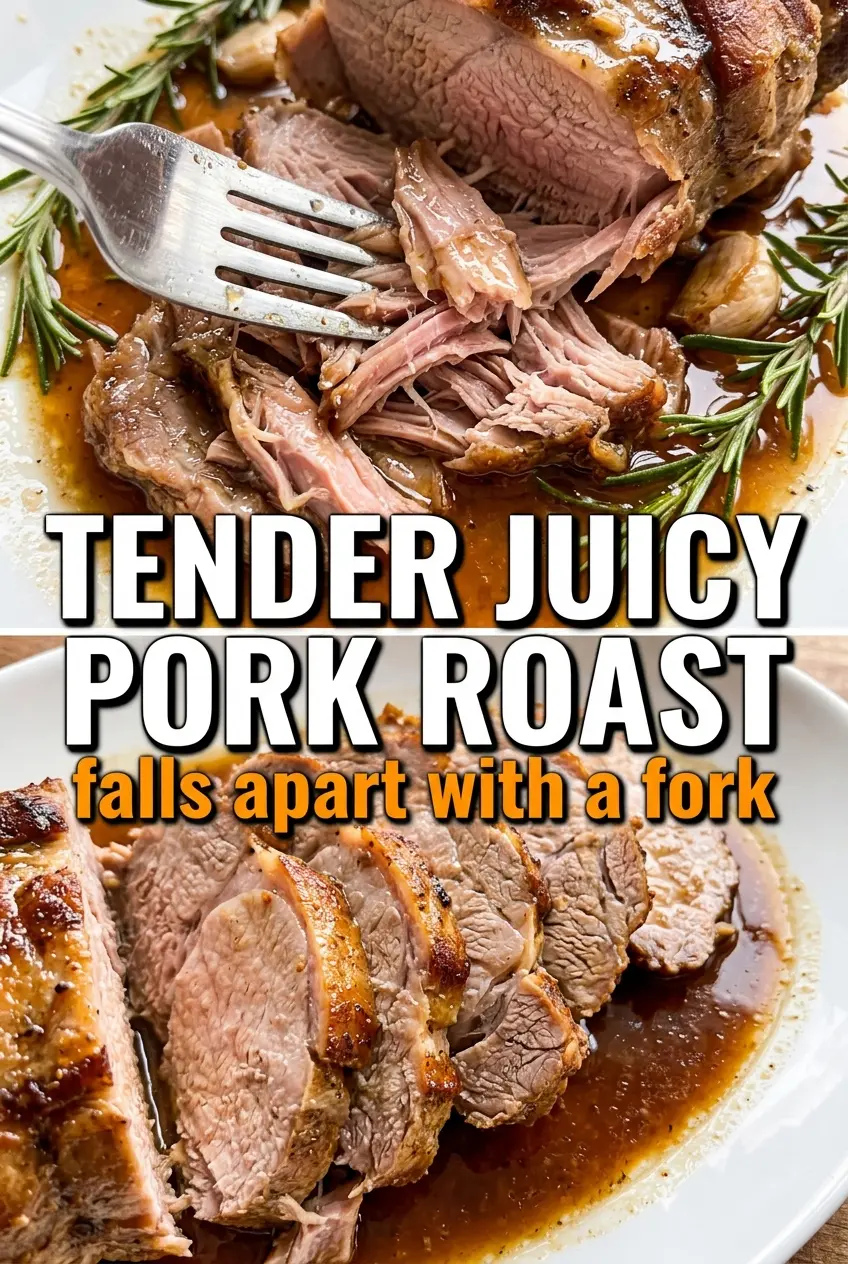
Tender Juicy Pork Roast
Ingredients
Equipment
Method
- Preheat the oven to 375°F and set an oven-safe skillet or roasting pan nearby so it’s ready to go.
- Mix olive oil, minced garlic, dried rosemary, dried thyme, smoked paprika, onion powder, salt, and black pepper into a paste.
- Pat the pork roast dry, then rub the herb paste all over every surface.
- Heat the oven-safe skillet or roasting pan over medium-high heat and sear the roast on all sides until golden, about 2–3 minutes per side.
- Pour chicken broth into the pan, transfer to the oven, and roast 60–75 minutes until the internal temperature reaches 145°F.
- Rest the roast 15 minutes before slicing, then spoon pan juices over the top.
- Slice the pork and serve with roasted vegetables, spooning over any remaining pan juices for shine.