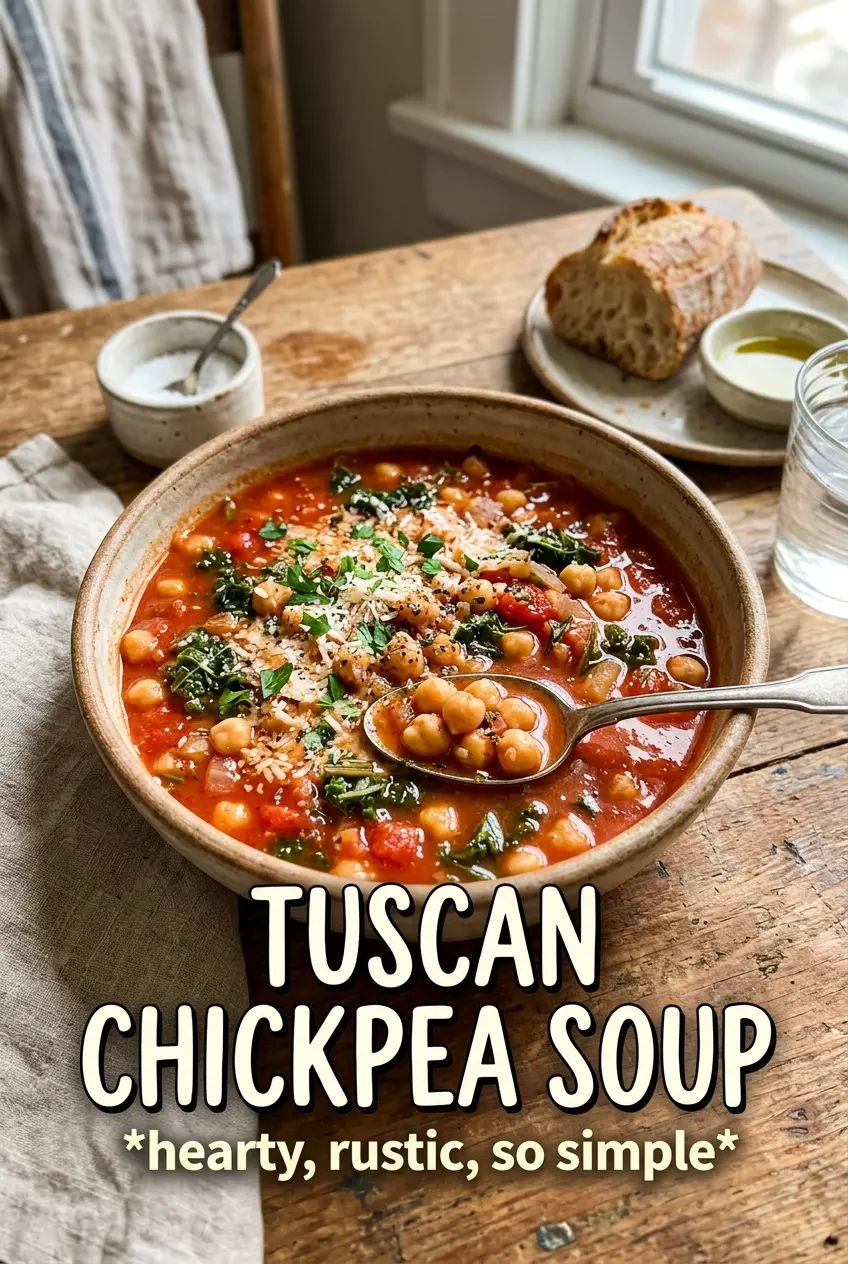
Tuscan chickpea soup lands in that sweet spot between hearty and light: brothy enough to feel spoonable and fresh, but thick enough to eat as a full meal. The chickpeas soften into the garlicky tomato broth, the rosemary gives it that unmistakable rustic edge, and the kale keeps each bowl from feeling heavy. A final drizzle of olive oil and a little parmesan on top makes the whole thing taste layered instead of one-note.
What makes this version work is the balance. The onions cook down first so the broth starts with sweetness, then the garlic and red pepper flakes bloom briefly before the liquid goes in. Mashing a portion of the chickpeas at the end gives the soup body without turning it into puree, which is the difference between a thin bean soup and one that feels satisfying. The parmesan rind is optional, but if you have one, it adds a salty, savory depth that fits this recipe beautifully.
Below you’ll find the small details that matter most: how to keep the garlic from going bitter, why the chickpeas should simmer before the kale goes in, and what to swap if you want to keep it dairy-free.
The broth got thick and silky after I mashed some of the chickpeas, and the rosemary-parmesan flavor made it taste like it had simmered all afternoon.
Save this Tuscan Chickpea Soup for a brothy, rosemary-scented dinner with creamy chickpeas and kale.
The Step That Keeps This Soup Brothy Instead of Muddy
The biggest mistake with chickpea soup is rushing the texture. If you blend too much, the broth turns heavy and grainy instead of creamy. The better move is to mash just enough chickpeas to give the soup body while leaving plenty whole for bite and shape.
That simmer before the kale goes in matters too. The tomatoes, rosemary, and parmesan rind need time to trade flavor with the broth, and the chickpeas need a little quiet cooking to soften and absorb it. If the soup tastes flat at the end, it usually means it never simmered long enough to build that base.
What Each Ingredient Is Actually Doing in the Bowl

- Chickpeas — They give the soup its substance. Canned chickpeas are perfect here because they hold their shape and save time, but rinse them well so the broth stays clean and not tinny.
- Parmesan rind — This is the quiet flavor builder. It melts enough to season the broth from within, and if you have one on hand, it adds a savory depth that salt alone can’t copy.
- Fresh rosemary — Dried rosemary won’t give the same fragrant, piney lift. If you have to swap, use less dried rosemary and strain it carefully so the soup doesn’t taste woody.
- Kale — Add it at the end so it stays green and tender. If it goes in too early, it turns dull and soft in a way that makes the soup feel overcooked.
- Fire-roasted tomatoes — These bring a little smokiness and sweetness that plain diced tomatoes won’t quite match. They give the broth more personality without needing extra work.
Building the Broth Before the Greens Go In
Sweating the Onion
Warm the olive oil over medium heat and cook the diced onion until it turns soft and translucent, about five minutes. You want it sweet and fragrant, not browned; browned onions will push the soup in a deeper direction than this recipe needs. If the pot looks dry before the onion softens, lower the heat instead of adding more oil.
Waking Up the Garlic and Pepper
Add the garlic and red pepper flakes and cook for about two minutes, just until the garlic smells strong and the raw edge disappears. The garlic should never take on much color here. If it starts to brown, it will turn bitter once the broth goes in.
Simmering the Chickpeas and Tomatoes
Pour in the chickpeas, tomatoes, broth, rosemary, Italian seasoning, and parmesan rind, then bring everything to a boil before lowering it to a steady simmer. This is where the soup gets its real character. Let it go for the full 20 minutes so the broth picks up the rosemary and the chickpeas start to soften enough to mash cleanly.
Thickening Without Losing Texture
Remove the rosemary sprigs and parmesan rind, then mash or briefly blend about a third of the chickpeas. This gives you a creamier broth without turning the whole pot into a puree. If you want to blend, use just a few short pulses; overblending makes the soup paste-like instead of rustic.
Finishing With the Kale and Lemon
Stir in the chopped kale and cook until it wilts and turns bright green, about five minutes. Add salt, pepper, and a squeeze of lemon at the end so the flavors sharpen up. The lemon is important because it lifts the broth and keeps the soup from tasting heavy after the parmesan and olive oil.
Three Ways to Adjust This Soup Without Losing What Makes It Good
Dairy-Free Version
Leave out the parmesan rind and finish with extra olive oil plus lemon. You lose a little of the savory depth, but the soup still tastes rounded if you season it well at the end. A small pinch of nutritional yeast can help replace some of that umami if you want it.
Extra-Chunky, More Stew-Like Soup
Skip the mashing step and add an extra half can of chickpeas if you want a heartier bowl. The broth will stay lighter and looser, which works well if you’re serving it with bread. Just expect a less creamy spoonful and a more brothy finish.
White Bean Swap
Cannellini beans work if that’s what you have, and they’ll make the soup a little softer and creamier. The flavor stays in the same family, but chickpeas bring a nuttier bite that white beans can’t fully match. Keep the simmer time the same so the broth has time to develop.
Storage and Reheating
- Refrigerator: Store for up to 4 days. The chickpeas will keep soaking up broth, so expect the soup to thicken a bit overnight.
- Freezer: It freezes well for up to 3 months. Cool it completely first and leave a little headspace in the container because the liquid will expand.
- Reheating: Warm gently on the stove over medium-low heat with a splash of broth or water. Don’t boil it hard or the kale can turn dull and the chickpeas can split apart.
Answers to the Questions Worth Asking
Tuscan Chickpea Soup
Ingredients
Equipment
Method
- Heat 2 tbsp olive oil in a large pot, then sauté the diced onion over medium heat for 5 minutes, stirring often, until softened and translucent.
- Add the minced garlic and red pepper flakes and cook for 2 minutes, stirring constantly, until fragrant and lightly toasted.
- Add the drained chickpeas, fire-roasted diced tomatoes, vegetable broth, rosemary sprigs, Italian seasoning, and the optional parmesan rind; bring to a boil over high heat.
- Reduce to a simmer and cook for 20 minutes, letting flavors meld until the broth tastes well seasoned.
- Remove the rosemary sprigs and parmesan rind, then mash or blend about a third of the chickpeas to thicken the soup while keeping some whole for texture.
- Add the chopped kale and cook for 5 minutes until wilted and tender, stirring to submerge it in the broth.
- Season with salt, pepper, and lemon, then drizzle with olive oil and top with parmesan before serving.