Tuscan white bean soup lands in that sweet spot between rustic and nourishing: brothy enough to feel light, but thick enough to eat with a spoon and a hunk of bread. The cannellini beans soften into the broth, the kale keeps its bite, and the pancetta gives the whole pot a salty backbone that keeps each bowl from tasting flat. A drizzle of olive oil at the end ties everything together and makes the soup taste finished, not just cooked.
What makes this version work is the layering. The pancetta fat seasons the onion, celery, and garlic before the broth even goes in, which builds depth fast. Then the parmesan rind and rosemary quietly do their work in the background while the beans simmer, giving you a broth that tastes like it took all afternoon even though it doesn’t. Mashing a portion of the beans in the pot is the move that gives the soup body without cream.
Below, I’m walking through the part that matters most: how to get the broth rich without making it heavy, plus the few ingredient swaps that still keep the soup true to its Tuscan-style roots.
The broth got this deep, savory flavor from the parmesan rind, and mashing a few beans made it thick enough that my kids ate it like stew with bread on the side.
Save this Tuscan White Bean Soup for the nights when you want a brothy, hearty dinner with rosemary, kale, and a Parmesan-rich finish.
The Trick to a Brothy Soup That Eats Like a Meal
The difference between a thin bean soup and one that feels substantial comes down to two things: building flavor before the liquid goes in, and giving part of the beans a chance to break down. If you add everything at once, you’ll get beans in broth. If you start by sweating the aromatics in pancetta fat, then finish by mashing some of the beans, the pot turns creamy and layered without any dairy.
That little mash matters more than people expect. It thickens the broth in a natural way, and it also helps the rosemary, tomato, and parmesan rind cling to the spoon instead of sinking to the bottom. If your soup still feels loose at the end, simmer it uncovered for a few extra minutes so the broth concentrates instead of watering itself down.
What Each Ingredient Is Actually Doing in the Pot

- Cannellini beans — These are the backbone of the soup. They hold their shape better than softer white beans, but they still mash into the broth easily, which is exactly what gives the soup body.
- Pancetta or bacon — This is your first layer of seasoning. Pancetta tastes a little cleaner and more Italian, while bacon brings a smokier edge; either one works, but you want enough fat left in the pot to coat the vegetables.
- Parmesan rind — This adds a salty, savory depth that grated cheese alone won’t give you. If you have it, use it; if not, the soup still works, but you’ll want to finish with a little more parmesan on top.
- Rosemary — Fresh rosemary infuses the broth without turning it muddy or bitter. Dried rosemary can work in a pinch, but use less and crush it between your fingers first so it doesn’t stay woody.
- Kale — Add it near the end so it stays green and a little chewy. If you cook it too long, it turns drab and soft, and the soup loses one of its best textures.
How to Build the Broth Without Losing the Texture
Render the Pancetta First
Cook the pancetta in a large pot until it’s browned and crisp at the edges. You want enough fat left behind to cook the vegetables; if the pot looks dry, add a small splash of olive oil. Pull the pancetta out before it starts to burn, because bitter bits will carry through the whole soup. Set it aside so you can use it at the end for crunch.
Cook the Aromatics in the Fat
Add the onion, celery, and garlic to the pot and cook until the onion turns translucent and the garlic smells sweet, not sharp. This is where the soup starts tasting built, not rushed. If the heat is too high, the garlic can brown before the onion softens, and that gives the broth a harsh edge, so keep the pot at a steady medium heat.
Simmer the Beans with the Broth and Herbs
Stir in the tomatoes, broth, rosemary, parmesan rind, Italian seasoning, and beans, then bring everything to a boil before lowering it to a steady simmer. The liquid should move gently, not roil hard, so the beans stay intact while still releasing starch into the broth. After about 20 minutes, the soup will taste fuller and the beans will be tender enough to mash a portion without turning to paste.
Finish with Kale and the Final Seasoning
Remove the rosemary sprigs and parmesan rind, then mash about a third of the beans against the side of the pot. Stir in the kale and let it wilt until it turns dark green and soft around the edges, usually 5 to 8 minutes. Taste before salting; pancetta, parmesan, and broth all bring salt, so the final seasoning usually needs less than people expect. Finish with olive oil, shaved parmesan, and the reserved pancetta right before serving.
Three Ways to Adjust the Soup Without Losing Its Character
Make it vegetarian without making it bland
Skip the pancetta and use olive oil to soften the vegetables, then lean on the parmesan rind if you’re using one. If you want the soup to taste just as deep, add an extra pinch of Italian seasoning and a little more black pepper at the end. The broth will be lighter, but the beans still give it enough substance.
Use bacon for a smokier bowl
Bacon gives the soup a stronger smoky note and a slightly sweeter finish than pancetta. It works well if you want the broth to feel heartier, but it can overpower the rosemary if you use a heavily smoked brand, so keep the seasoning balanced and don’t add extra smoked ingredients.
Make it dairy-free with one small omission
Leave out the parmesan rind and finish with olive oil instead of cheese on top. The soup still tastes rich because the beans and pancetta do most of the work, but the finish will be a little less salty and savory. Add a touch more seasoning at the end so the broth doesn’t taste quiet.
Swap kale for spinach if that’s what you have
Spinach wilts in a minute or two, so add it at the very end and take the pot off the heat as soon as the leaves collapse. The texture is softer and less rustic than kale, but the flavor still works. Just don’t simmer it like kale or it’ll disappear into the broth.
Storage and Reheating
- Refrigerator: Store in an airtight container for up to 4 days. The soup thickens as it sits because the beans keep absorbing broth.
- Freezer: Freezes well for up to 3 months. Cool it completely first, and leave a little space at the top of the container so the broth can expand.
- Reheating: Warm it slowly on the stove over medium-low heat with a splash of broth or water. Don’t boil it hard, or the kale can turn dull and the beans can break down too far.
Answers to the Questions Worth Asking
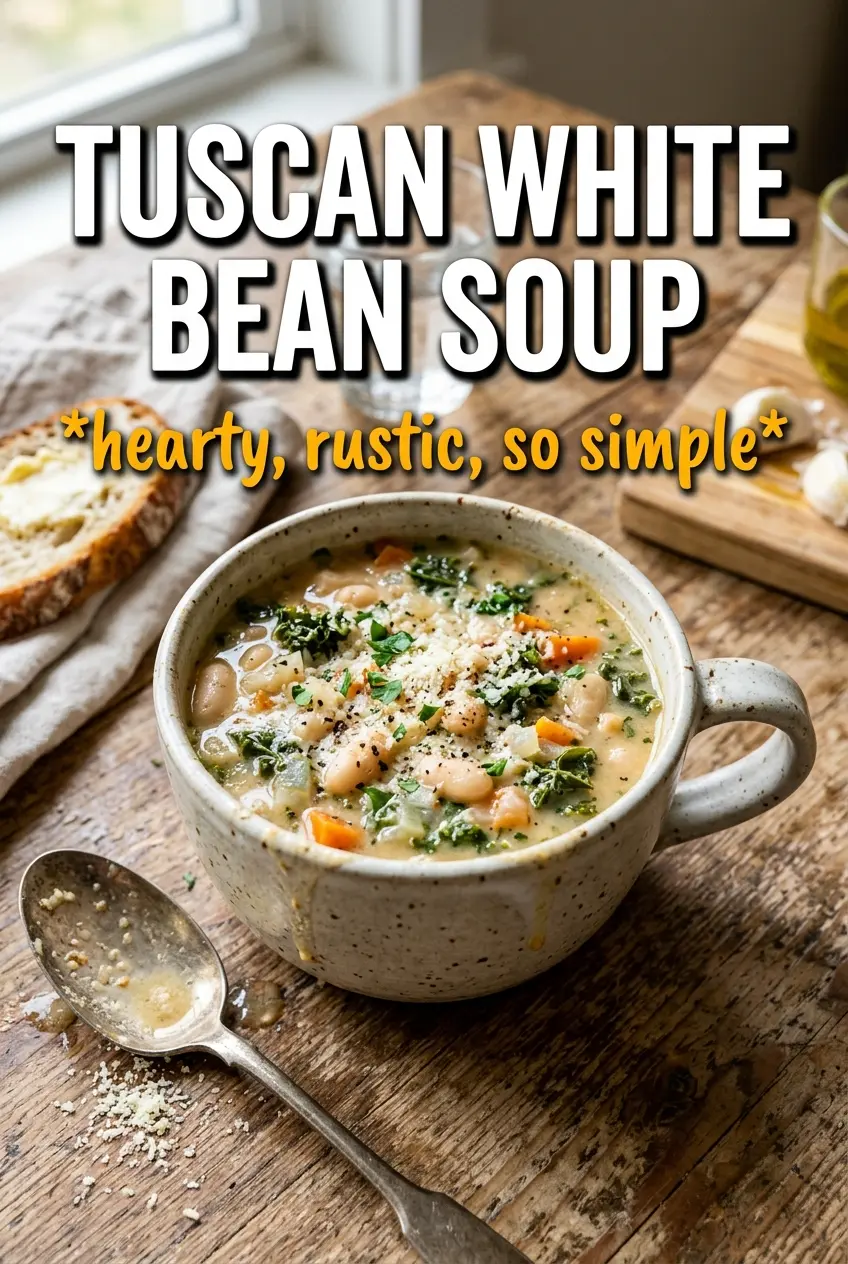
Tuscan White Bean Soup
Ingredients
Equipment
Method
- Cook the pancetta in a large pot over medium heat until crispy, about 8-10 minutes, and transfer it to a plate so it stays crisp.
- In the same pot, sauté the onion, celery, and garlic in the fat over medium heat for 5 minutes until softened and fragrant.
- Add the diced tomatoes, broth, rosemary sprigs, parmesan rind if using, and Italian seasoning, then bring the mixture to a boil.
- Stir in the cannellini beans and simmer for 20 minutes over a gentle bubble.
- Remove the rosemary and parmesan rind, then mash about a third of the beans in the pot to thicken the broth.
- Add the kale and simmer for 5-8 minutes until wilted and tender.
- Season with salt and pepper to taste, then drizzle with olive oil and top with parmesan shavings and crispy pancetta.