Vanilla Bourbon Cranberry Sauce turns a basic holiday side into something glossy, tart, and just a little luxurious. The cranberries break down into a spoonable sauce while still keeping enough texture to catch on a turkey slice, biscuit, or spoon. The bourbon doesn’t make it taste boozy; it rounds out the sharp cranberry bite and leaves a warm finish that lingers after the sweetness fades.
This version works because the sugars, juice, and half the bourbon go in first, before the berries. That gives the liquid a chance to develop a deeper base instead of tasting like plain syrup with fruit stirred in at the end. The vanilla bean adds a soft, perfumed note that makes the sauce feel fuller and more complete, especially once it chills and the flavors settle together.
Below, I’ve included the one timing detail that matters most, plus a few ways to adapt this if you’re out of vanilla bean or want a non-alcoholic version that still tastes layered and rich.
The sauce thickened up perfectly, and the vanilla with the bourbon gave it a deep, grown-up flavor without making it taste too sweet. I made it the night before, and it was even better chilled the next day.
Save this Vanilla Bourbon Cranberry Sauce for the holidays when you want a bright, glossy cranberry side with a vanilla finish.
The Reason Cranberry Sauce Gets Flat Instead of Glossy
The problem with a lot of cranberry sauce is that it starts and ends like sweetened fruit soup. The berries never get a chance to concentrate, and the sauce tastes thin even after it cools. Here, the sugar, orange juice, bourbon, and vanilla hit the pan first, which gives you a syrupy base with actual depth before the cranberries go in.
The other thing that matters is the simmer. Cranberries need enough heat to burst, but not such a hard boil that the liquid evaporates too fast and leaves you with jammy paste. If the sauce looks loose at 10 minutes, keep going another minute or two; it thickens more as it cools, and it should coat a spoon without turning stiff in the pan.
What the Vanilla Bean and Bourbon Are Really Doing
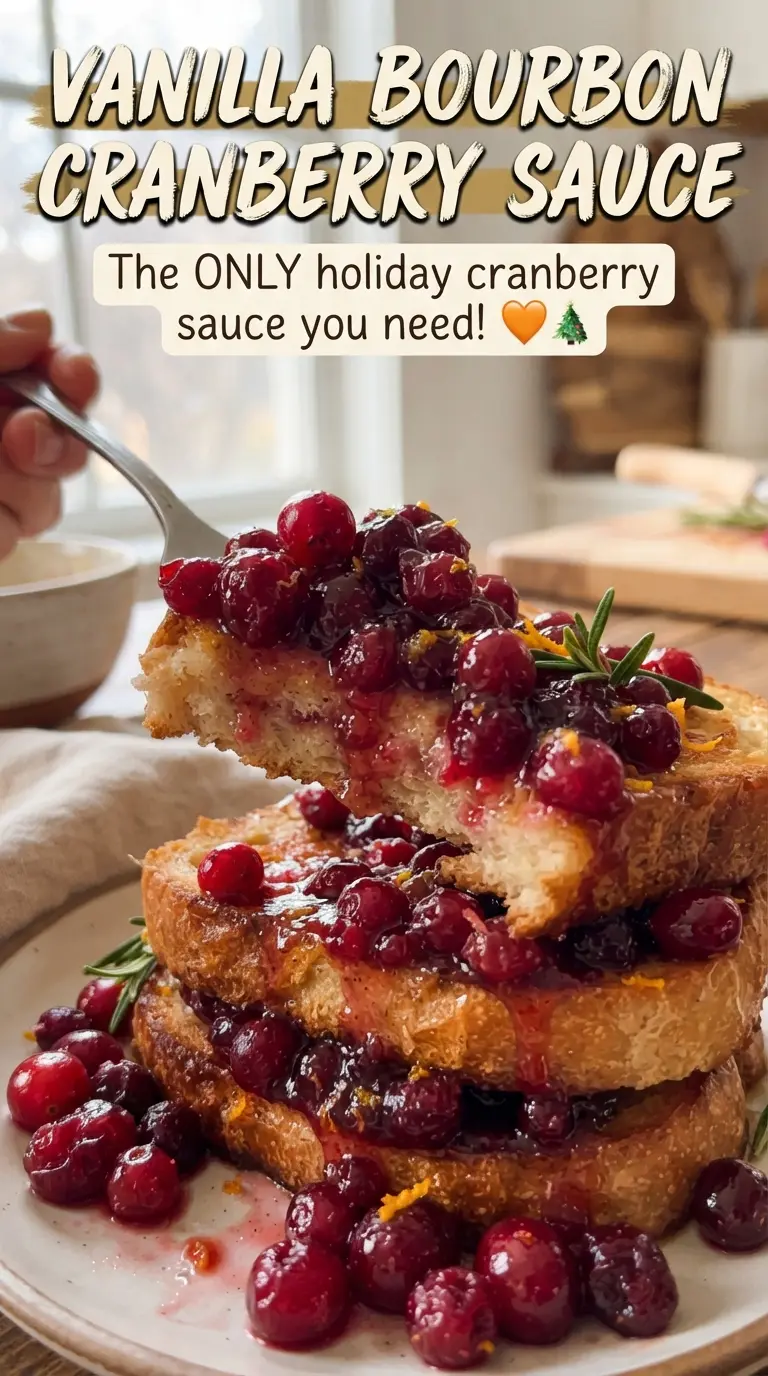
- Fresh cranberries — These are the backbone of the sauce. Frozen cranberries work too; use them straight from the freezer and expect a slightly longer simmer, not a different method.
- Brown sugar + granulated sugar — Brown sugar brings molasses depth, while granulated sugar keeps the sweetness clean. If you only have one or the other, use all of that single sugar, but the finished sauce will taste a little less layered.
- Bourbon — Dividing it matters. The first addition cooks into the base and softens the sharp edges, while the second stir-in at the end keeps the aroma alive. If you skip it entirely, replace it with orange juice and a tiny splash of vanilla for warmth, though the finish won’t be as rounded.
- Vanilla bean — This is the ingredient that makes the sauce taste polished instead of just sweet-tart. Vanilla extract works in a pinch, but add it off the heat so the flavor doesn’t fade.
- Orange juice — It lifts the cranberries and keeps the sauce from tasting one-note. Fresh juice is best here because bottled juice can taste dull and a little flat once reduced.
Building the Sauce Without Cooking Off the Good Stuff
Start with the syrup base
Combine the sugars, water, orange juice, 1/4 cup bourbon, vanilla bean and seeds, and salt in the saucepan and bring it to a boil. You want the sugar fully dissolved before the cranberries go in, or the sauce can taste grainy at the end. The base should look clear and glossy, not sandy.
Cook until the berries burst, not until they disappear
Add the cranberries and bring the mixture back to a boil, then drop it to a steady simmer. Within a few minutes, you’ll hear the berries start to pop. That’s the signal to stay close, because once most of them have burst, the sauce can go from perfect to too thick fast if you walk away.
Finish off the heat
When the sauce has thickened, remove it from the heat and stir in the remaining bourbon. Doing this at the end keeps that last bit of aroma from boiling away. Pull out the vanilla pod, then let the sauce cool before chilling; it will look looser in the pan than it does on the plate, and that’s exactly right.
How to Adapt It for Different Tables
Non-alcoholic version
Replace the bourbon with extra orange juice plus 1 to 2 teaspoons vanilla extract added off the heat. You’ll lose the bourbon’s warm edge, but the sauce still tastes layered instead of flat because the orange and vanilla keep it from reading as plain cranberry jam.
Using vanilla extract instead of a bean
Use 2 teaspoons vanilla extract and stir it in after you take the pan off the heat. A bean gives you those little specks and a deeper aroma, but extract still brings the rounded vanilla note if that’s what you have.
Less sweet, more tart
Cut the granulated sugar back a couple tablespoons if you like a sharper cranberry sauce. Don’t reduce the brown sugar too much, or you’ll lose the deeper caramel note that balances the bourbon.
Storage and Reheating
- Refrigerator: Store covered for up to 1 week. The sauce thickens as it chills and the flavor gets even better by day two.
- Freezer: It freezes well for up to 2 months. Pack it in a freezer-safe container with a little headspace, then thaw overnight in the fridge.
- Reheating: Warm it gently on the stove over low heat or use it cold. If it seems too thick after chilling, stir in a teaspoon of water or orange juice at a time; don’t boil it hard, or the texture can turn gluey.
Answers to the Questions Worth Asking
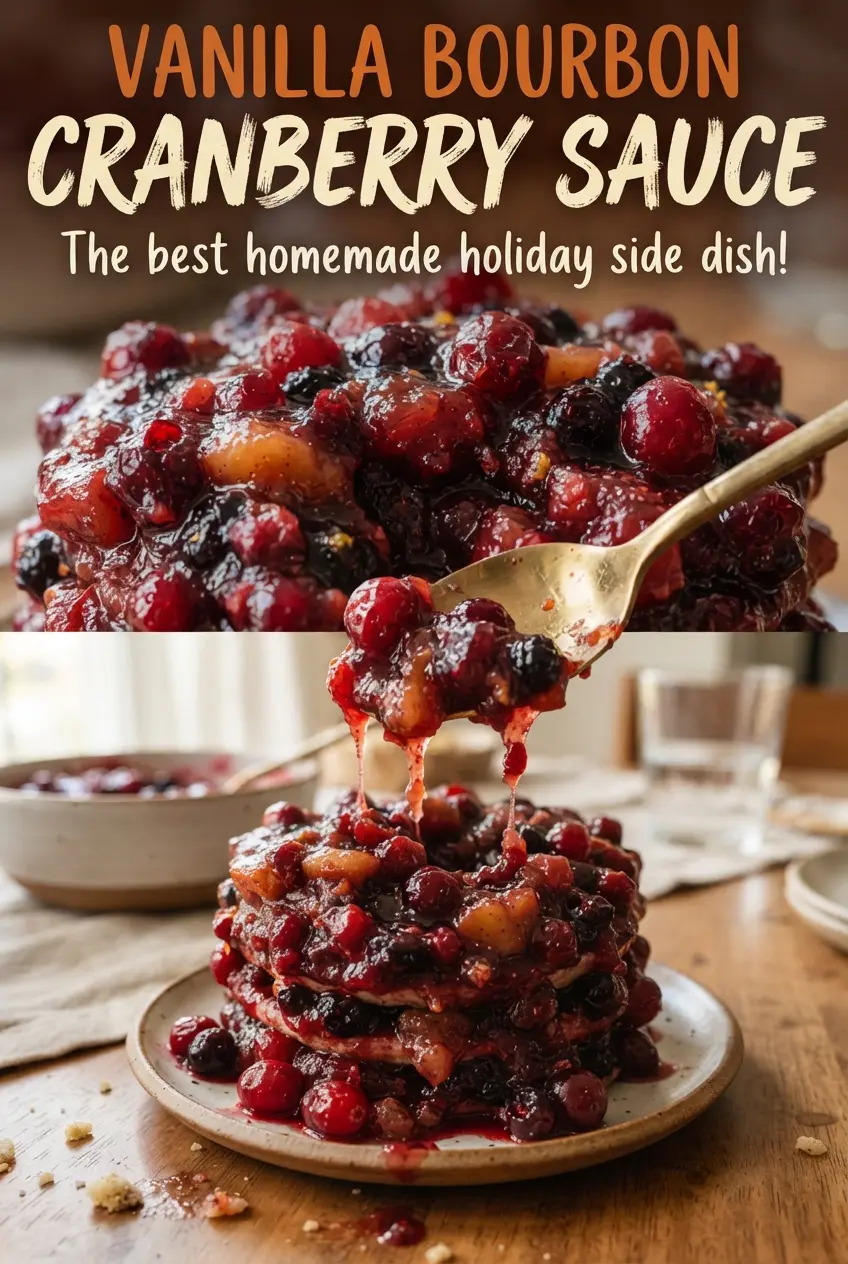
Vanilla Bourbon Cranberry Sauce
Ingredients
Equipment
Method
- Combine both sugars, water, orange juice, 1/4 cup bourbon, vanilla bean and seeds, and salt in a saucepan; bring to a boil over high heat until fully bubbling.
- Add cranberries and return to a boil, stirring so the berries begin to soften immediately.
- Simmer 10-12 minutes, stirring occasionally, until berries burst and the sauce thickens to a glossy consistency.
- Remove from heat and stir in the remaining bourbon until evenly incorporated.
- Remove the vanilla pod, then cool the sauce before chilling in the refrigerator prior to serving.