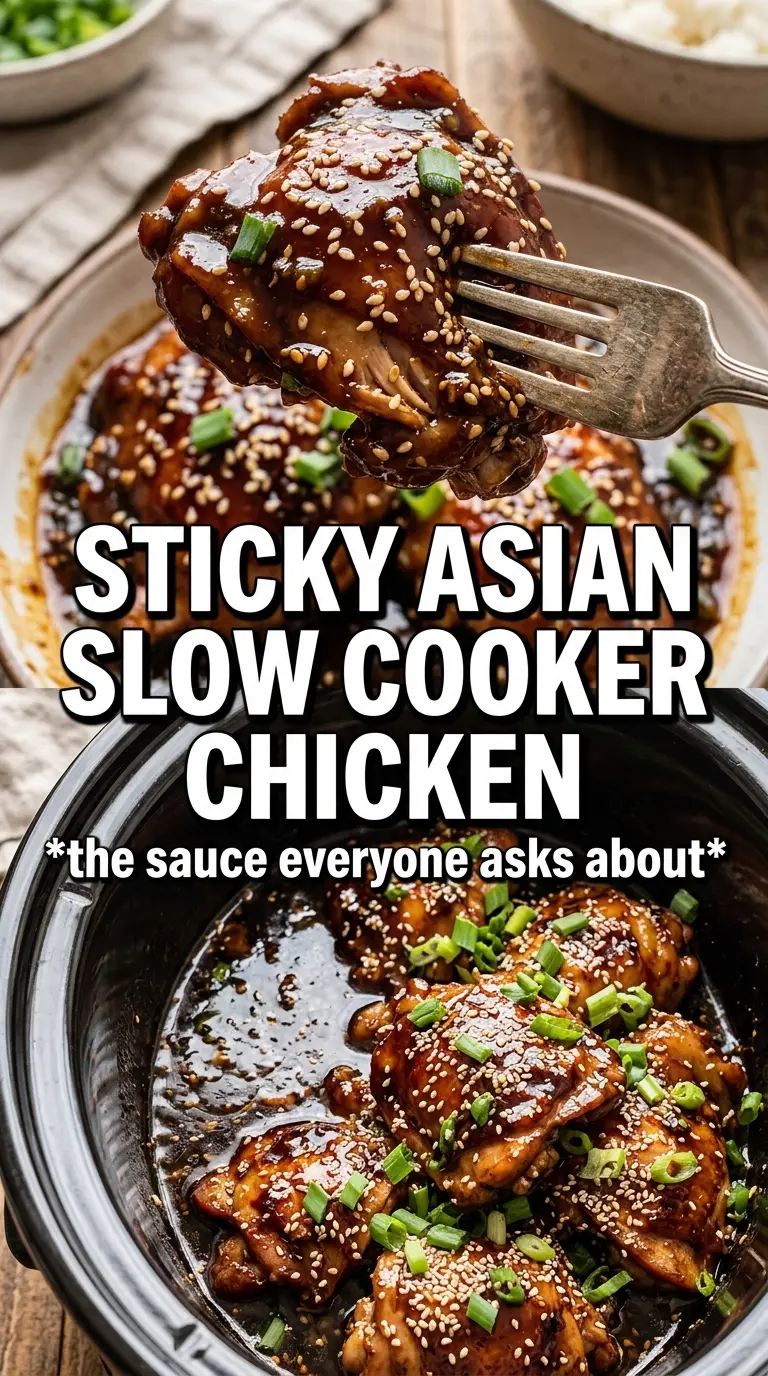
Sticky, savory chicken thighs with a glossy soy-ginger sauce are the kind of slow cooker dinner that earns a permanent place in the rotation. The meat turns spoon-tender without drying out, and the sauce finishes with enough shine and body to cling to every bite of rice. You get big takeout-style flavor without standing at the stove.
This version works because the sauce starts balanced before it ever hits the slow cooker. Soy sauce and hoisin bring salt and depth, honey rounds out the edges, rice vinegar keeps it from tasting flat, and sesame oil adds that nutty finish you notice right away. The chicken thighs have enough fat to stay succulent through a long, gentle cook, which is exactly why they work here better than lean cuts would.
Below, I’ll show you why the thickening step matters, which ingredient swaps hold up, and how to keep the sauce glossy instead of watery at the end. If you’ve ever had a slow cooker sauce taste good but look thin, this method fixes that.
The chicken came out fall-apart tender, and the sauce thickened up beautifully at the end instead of staying thin like most slow cooker sauces. My husband went back for seconds and asked if I could put this in the weekly meal plan.
Save these slow cooker chicken thighs for a glossy soy-ginger dinner that finishes tender, sticky, and perfect over jasmine rice.
The Reason This Sauce Stays Glossy Instead of Going Watery
The biggest mistake with slow cooker chicken is treating the sauce like it will reduce on its own. It won’t. A slow cooker traps moisture, so if you skip the finishing step, you end up with seasoned broth instead of a sauce that actually coats the chicken. The cornstarch slurry at the end is what changes the texture from thin to lacquered.
Chicken thighs help here because they stay juicy during the long cook, and that extra richness gives the sauce something to cling to. If you use breasts, the dish can still work, but the timing gets tighter and the meat can dry out before the sauce reaches the right consistency. The low-slow method gives the garlic and ginger time to mellow without turning harsh.
- Chicken thighs — Boneless thighs are the right cut because they stay tender through a long cook. Bone-in thighs work too, but add extra time and pull them out only when they’re fully tender.
- Soy sauce and hoisin — These are the backbone of the dish. Soy brings salt and depth; hoisin adds sweetness, body, and that dark, sticky takeout-style finish you can’t fake with plain sugar.
- Sesame oil — Use the real toasted stuff here, not plain sesame oil, because the aroma is part of the dish. A little goes a long way, so don’t overdo it or the sauce turns heavy.
- Cornstarch slurry — Mix it with cold water first so it disperses cleanly. If you dump dry cornstarch straight into hot sauce, you’ll get little lumps that never fully disappear.
What Each Ingredient Is Actually Doing in This Recipe
- Primary ingredient (the star) — Quality matters most. Choose the best you can find.
- Cooking medium (oil, butter, or broth) — This carries flavors and prevents dryness.
- Seasonings (salt, pepper, spices, herbs) — Layer flavors so nothing overpowers. Build depth gradually.
- Aromatics (garlic, onion, herbs) — Cook with fat to bloom flavors. Become the foundation.
- Supporting ingredients — Complement the main ingredient without overpowering it.
- Sauce or liquid (if applicable) — Brings flavors together. Balance richness with acid.
- Acid (lemon, vinegar, wine, or other) — Brightens and prevents flat-tasting results.
- Final finish (garnish, glaze, or sauce) — Prevents one-dimensional taste and adds visual appeal.
Building the Sauce So the Chicken Stays Tender
Whisking the Flavor Base
Whisk the soy sauce, hoisin, honey, rice vinegar, sesame oil, garlic, ginger, and sriracha until the honey loosens completely and the mixture looks smooth and glossy. That matters because thick honey can sink to the bottom of the slow cooker if it isn’t fully blended first. The sauce should taste bold and a little sharp before it cooks; slow heat softens it.
Coating the Chicken Evenly
Lay the chicken thighs in the slow cooker and pour the sauce over them so every piece gets coated. You don’t need to brown them first for this recipe; the slow cooker is doing the tenderizing, and an extra pan step won’t give you much back here. If a thigh is sitting above the liquid line, spoon sauce over it once before covering the pot.
Waiting for the Right Tenderness
Cook on Low for 4 to 5 hours, or High for about 2 to 2.5 hours, until the chicken is tender and pulls apart easily with a fork. If it cooks much longer than that, the thighs can start to shred too much and lose their shape. You’re looking for soft, juicy meat that still holds together when you lift it out.
Thickening Without Lumps
Remove the chicken before adding the cornstarch slurry, then stir the slurry into the hot sauce and cook on High for 15 to 20 minutes. The sauce needs direct heat and a little time to turn shiny and thick; if it doesn’t thicken, the cooker may still be on too low a setting. Put the chicken back only after the sauce has noticeably tightened, or it will thin out again.
What to Change When You Need a Different Version
Gluten-Free Version
Use a gluten-free soy sauce or tamari and check the hoisin label, since many brands contain wheat. The flavor stays deep and savory, and the texture doesn’t change at all.
Milder for Kids or Heat-Sensitive Eaters
Leave out the sriracha and finish with a little extra honey if you want the sauce sweeter. You’ll lose the gentle heat, but the sauce still tastes balanced because the vinegar and sesame oil do enough to keep it from feeling flat.
Using Chicken Breasts Instead
Chicken breasts can be used, but start checking them early because they dry out faster than thighs. Pull them as soon as they hit tender and don’t leave them in the cooker while the sauce thickens any longer than needed.
Extra-Glossy, Restaurant-Style Sauce
Add another teaspoon of cornstarch to the slurry if you like a thicker finish for rice bowls. The sauce will cling more heavily to the chicken, but don’t overdo it or it can turn pasty instead of glossy.
Storage and Reheating
- Refrigerator: Store leftovers in an airtight container for up to 4 days. The sauce thickens as it chills, which is normal.
- Freezer: Freezes well for up to 2 months. Cool it completely first and freeze the chicken with plenty of sauce so it reheats moist instead of dry.
- Reheating: Reheat gently on the stove over low heat or in the microwave at 50% power, adding a splash of water if the sauce looks too tight. High heat can push the chicken from tender to stringy fast.
Answers to the Questions Worth Asking
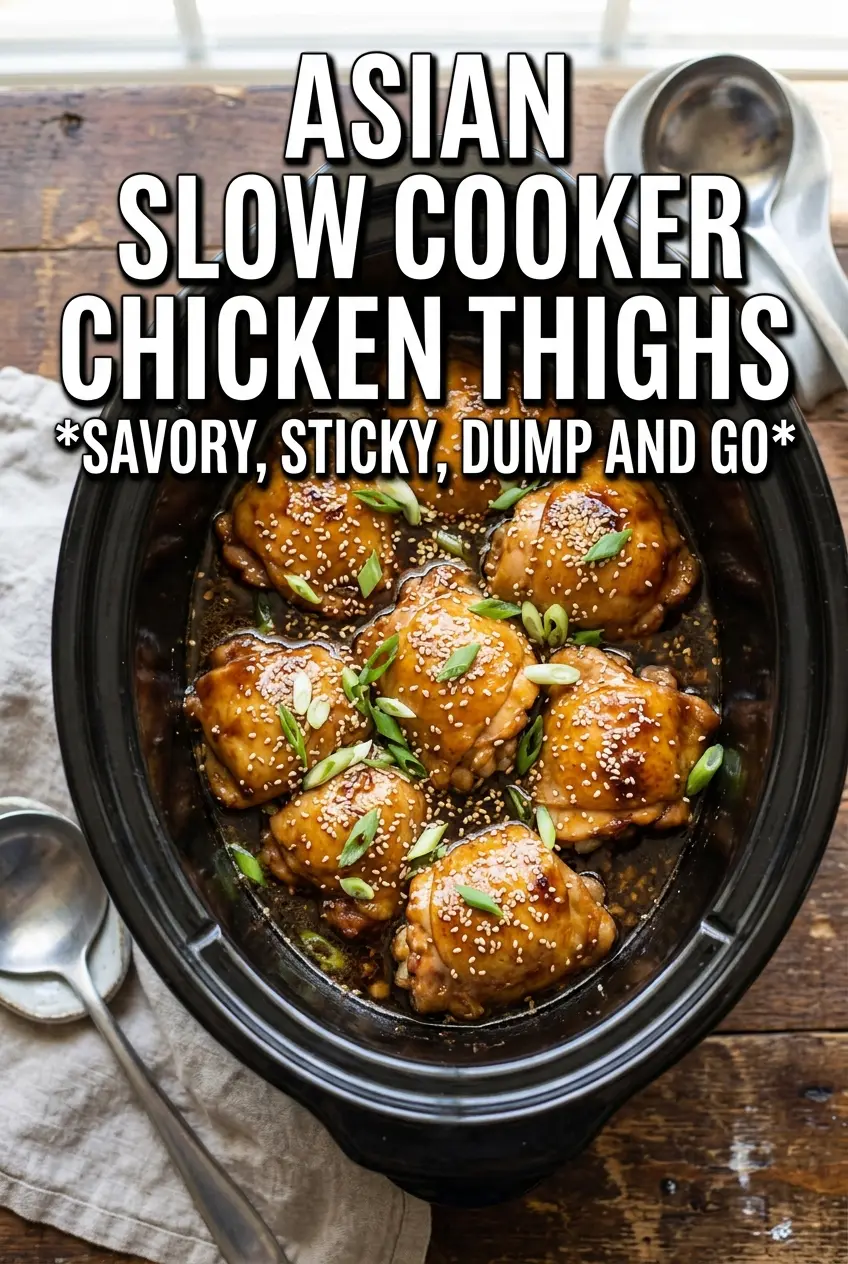
Asian Slow Cooker Chicken Thighs
Ingredients
Equipment
Method
- Whisk soy sauce, hoisin sauce, honey, rice vinegar, sesame oil, minced garlic, grated ginger, and sriracha until smooth and evenly combined.
- Place boneless chicken thighs in the slow cooker and pour the sauce over them, coating each piece well.
- Cook on Low for 4–5 hours until the chicken is tender and easy to shred.
- Remove the chicken from the slow cooker and stir the cornstarch slurry (cornstarch mixed with water) into the sauce.
- Cook on High for 15–20 minutes until the sauce is glossy and thick.
- Return the chicken to the sauce and stir to coat, then serve over jasmine rice.
- Top the chicken and rice with sesame seeds and sliced green onions.