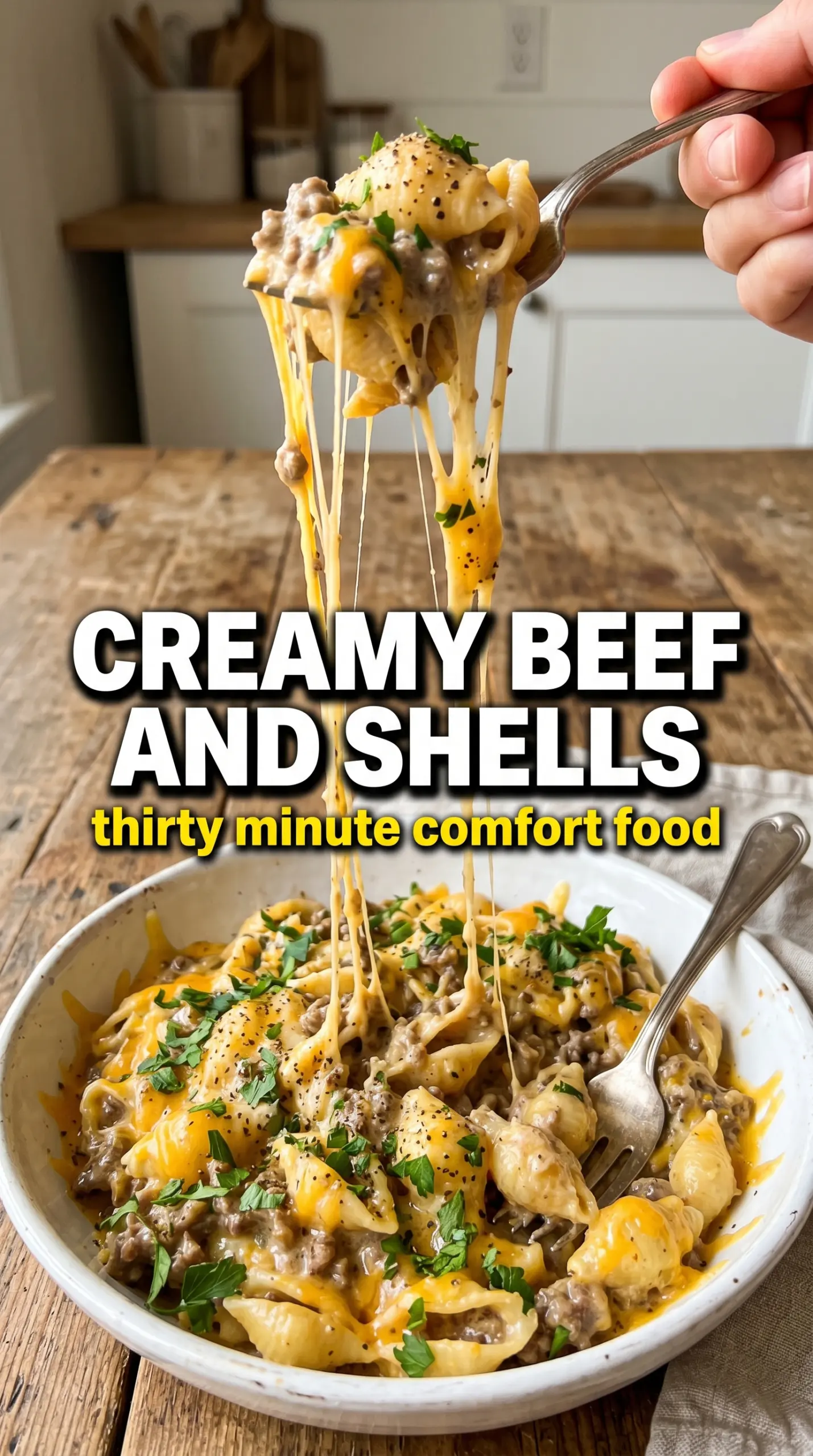
Rich, cheesy, and built for a hungry weeknight, creamy beef and shells hits that sweet spot where the pasta turns tender in a savory tomato-beef sauce and every shell catches a little pocket of cream and melted cheddar. It eats like comfort food should: hearty, spoonable, and just saucy enough to keep each bite interesting.
The trick here is cooking the pasta right in the same skillet with the broth, tomatoes, and seasoning. That gives the shells time to absorb flavor instead of sitting in plain water, and it leaves just enough starch behind to help the sauce turn silky once the cream and cheese go in. Rotel brings a little heat and brightness, while smoked paprika deepens the base so the final dish tastes like it simmered longer than it did.
Below, I’ll show you how to keep the sauce from getting dull or grainy, plus a few smart swaps if you need to work with what’s in the pantry. There’s also a storage note for the leftovers, because this one reheats well if you handle it the right way.
The shells held onto the sauce perfectly and the cheddar melted in without getting oily. I used the full 15 minutes for the pasta and it came out creamy, not soupy.
Creamy Beef and Shells keeps its best texture when the pasta finishes right in the sauce and the cheddar melts in off the heat.
The Part That Keeps the Sauce Creamy Instead of Heavy
The biggest mistake with creamy beef and shells is rushing the dairy. If the cream or cheese goes in while the sauce is boiling hard, the fat can separate and the whole skillet starts tasting greasy instead of smooth. The pasta also needs a little time in the liquid to release starch, because that starch gives the sauce body without making it gluey.
Another thing that matters here is the amount of liquid left before the cream goes in. You want the shells tender and most of the broth absorbed, but not completely dry. If the pan looks tight and the pasta still needs another minute, add a splash of broth or water and keep it covered until the shells are just tender.
What Each Ingredient Is Actually Doing in the Skillet
- Ground beef — This gives the dish its hearty base and enough fat to carry the seasoning. Use an 80/20 blend if you can; leaner beef works, but you may need a touch of oil after draining.
- Onion and garlic — They build the savory layer that keeps the sauce from tasting flat. Cook the onion until it softens before adding the garlic, because garlic burns fast and turns bitter in a shallow skillet.
- Shell pasta — Medium shells are worth using here because they scoop up the sauce inside each curve. A different short pasta works in a pinch, but shells give you that creamy coating in every bite.
- Beef broth, diced tomatoes, and Rotel — This is the cooking liquid and the flavor engine at the same time. The Rotel adds acidity and a little heat, while the plain diced tomatoes keep the sauce from becoming too spicy or one-note.
- Heavy cream — This is what turns the tomato-beef base into a proper creamy sauce. Half-and-half will work, but it won’t thicken the same way and the sauce will stay lighter.
- Sharp cheddar — Sharp cheddar melts with more flavor than mild cheese, so you get a stronger finish without needing a lot of extra seasoning. Shred it yourself if you can; pre-shredded cheese can melt a little grainy because of the anti-caking coating.
Building the Pasta So It Cooks Right in the Sauce
Brown the Beef First
Start with a hot skillet and let the beef get some color before you move on. You’re not just cooking it through; you’re building the savory base that gives the sauce depth. If there’s a lot of fat in the pan after browning, drain off the excess, but leave enough behind to carry the onion and garlic.
Let the Shells Simmer, Don’t Rush Them
Once the broth, tomatoes, and pasta go in, bring everything to a boil, then drop the heat and cover the pan. The pasta should cook in a steady simmer, not a wild boil, or the liquid reduces too fast before the shells soften. Stir once or twice so nothing sticks on the bottom, and watch for the shells to turn tender with only a little bite left in the center.
Finish with Cream and Cheese Off the Heat
When the pasta is tender and most of the liquid is gone, stir in the cream and let it simmer uncovered for just a few minutes. The sauce should look loose at first, then turn glossy and clingy as it reduces. Pull the skillet off the burner before adding the cheddar, because cheese melts smoother when the heat isn’t aggressive enough to squeeze out the fat.
How to Adapt Creamy Beef and Shells Without Losing the Good Part
Gluten-Free with a Different Pasta
Use a sturdy gluten-free short pasta that holds up to simmering, and check it a minute early. Gluten-free pasta can go from firm to soft fast, so the best result is to stop cooking when it still has a little bite and let the residual heat finish it.
Dairy-Free with Less Richness but Good Body
Swap the heavy cream for unsweetened full-fat coconut milk and use a dairy-free shreddable cheese if you like, though the flavor will shift a little. You’ll lose some of the sharp cheddar finish, but the sauce still turns creamy if you simmer it gently and don’t let it boil after the dairy-free milk goes in.
Spicier with More Heat
Add extra Rotel or a pinch of crushed red pepper with the tomatoes if you want more heat. That keeps the spice layered into the sauce instead of tasting like a sharp afterthought on top.
Storage and Reheating
- Refrigerator: Store in an airtight container for up to 4 days. The sauce thickens as it sits, and the pasta will keep soaking up liquid.
- Freezer: It freezes, but the texture softens a bit after thawing. Freeze in portions for up to 2 months and expect the sauce to look less silky once reheated.
- Reheating: Rewarm gently on the stove or in the microwave with a splash of broth or milk. High heat is the main mistake here because it tightens the cheese and makes the sauce seem broken before it has a chance to loosen back up.
Answers to the Questions Worth Asking
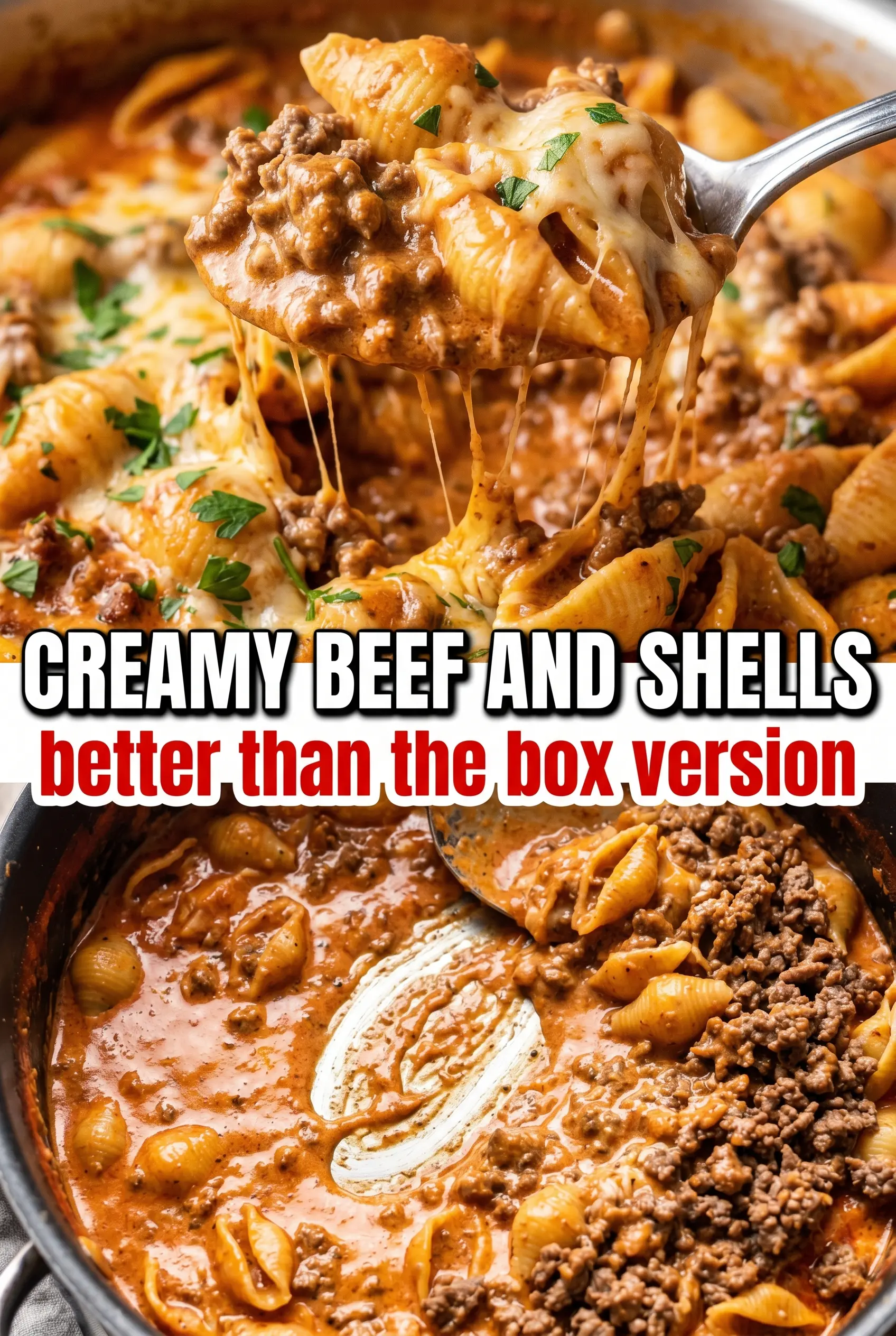
Creamy Beef and Shells
Ingredients
Equipment
Method
- Brown the ground beef in a large deep skillet over medium-high heat, breaking it apart until it’s no longer pink. Drain any excess fat so the sauce stays rich but not greasy, then keep the skillet hot.
- Add the diced onion and cook for 3 minutes until softened. Stir in the minced garlic and cook 1 more minute until fragrant.
- Add the uncooked shells, beef broth, diced tomatoes, Rotel, Italian seasoning, smoked paprika, salt, and black pepper, then stir to combine and evenly coat the pasta. Bring the mixture to a boil.
- Reduce heat to medium-low, cover the skillet, and cook for 12–15 minutes until the pasta is tender and most liquid is absorbed, shaking the pan once if needed. Watch for bubbling through the cover as the sauce thickens around the shells.
- Stir in the heavy cream and simmer uncovered for 2–3 minutes until the sauce thickens and looks creamy. Keep the heat at a gentle simmer to avoid scorching.
- Remove from heat, then stir in the shredded cheddar until fully melted and glossy. Serve immediately while the cheese pools inside the shells.