Golden seared chicken breasts tucked into a sun-dried tomato cream sauce earn their reputation fast. The sauce turns glossy and rich without feeling heavy, and the basil at the end gives the whole skillet a fresh finish that keeps each bite from tasting flat. It’s the kind of dinner that looks restaurant-worthy but still lands on the table in under 40 minutes.
What makes this version work is the order. The chicken gets a proper sear first, which builds flavor in the pan and gives the sauce something worth deglazing. Then the garlic and sun-dried tomatoes bloom briefly before the cream goes in, so the sauce tastes layered instead of one-note. Parmesan thickens it naturally, but only if you keep the heat gentle once it’s added.
Below, I’ll walk you through the little details that keep the sauce smooth, how to keep the chicken juicy, and the smartest swaps if you need to stretch the recipe or adjust it for what’s in your kitchen.
The sauce thickened up beautifully and coated the chicken without separating. I served it over mashed potatoes, and my husband asked if we could have it again next week.
Save this Marry Me Chicken recipe for a creamy skillet dinner with a silky sun-dried tomato sauce and golden seared chicken.
The Part That Stops the Sauce From Turning Grainy
The biggest mistake with a cream sauce like this is rushing the heat once the Parmesan goes in. That cheese needs a gentle simmer, not a bubbling boil, or it can turn sandy and separate from the cream. The skillet should stay at a lazy simmer after the dairy goes in, with tiny bubbles around the edges rather than a hard boil in the center.
The other thing worth paying attention to is the chicken itself. If the pan is crowded, the breasts steam instead of sear, and you lose the browned fond that gives the sauce its depth. Cook in a pan large enough for each piece to make contact with the surface, and leave the chicken alone until it releases cleanly.
What Each Ingredient Is Actually Doing in the Skillet

- Chicken breasts — Boneless, skinless breasts give you that clean, elegant slice through the sauce. If yours are thick on one end, pound them lightly so they cook at the same pace and don’t dry out before the center reaches temperature.
- Sun-dried tomatoes in oil — These bring concentrated tomato flavor and a little oil from the jar that carries the garlic and spices. Dry-packed tomatoes can work in a pinch, but they’re firmer and less silky, so soak them in hot water first and add a little extra olive oil.
- Heavy cream — This is what makes the sauce lush and stable. Half-and-half will thin the sauce and needs more careful simmering; if you use it, expect a lighter finish and a little less body.
- Parmesan — Freshly grated Parmesan melts more smoothly than the bagged kind and thickens the sauce without turning it gluey. Pre-grated cheese often has anti-caking agents, which can make the sauce a bit grainy.
- Chicken broth — A small amount loosens the pan drippings and keeps the cream from tasting flat. Use a low-sodium broth if you want more control over seasoning, since the Parmesan adds salt too.
- Fresh basil — Don’t skip it. The basil cuts through the richness at the end and keeps the sauce tasting bright instead of heavy.
How to Build the Sauce Without Losing the Sear
Season the Chicken Like You Mean It
Season both sides generously before the pan ever hits the heat. The salt needs time on the surface to help the chicken stay juicy, and the garlic powder, Italian seasoning, and smoked paprika build a savory crust once the oil shimmers. If the chicken looks wet from condensation, pat it dry first or the skillet will sputter and the surface won’t brown cleanly.
Sear Until It Releases Naturally
Set the chicken into hot oil and leave it alone. After a few minutes, it should lift from the pan without tearing; that’s your signal the crust is set. If you try to flip too soon, the browned coating sticks and you leave the best flavor behind in the skillet.
Wake Up the Garlic and Tomatoes
Once the chicken comes out, the garlic and sun-dried tomatoes go into the same pan for a short, fragrant cook. The garlic should smell sweet, not sharp, and you only want the tomatoes heated through so they soften into the sauce without burning. If the garlic browns hard, the whole sauce picks up bitterness, so keep it moving.
Finish with Low, Gentle Heat
After the broth deglazes the pan, add the cream and Parmesan and let the sauce thicken slowly. It should coat the back of a spoon in a few minutes, not reduce into paste. Return the chicken to the pan only after the sauce has some body, then spoon it over the top so every piece gets covered and the juices fold back into the skillet.
Three Ways to Work This Recipe Around What’s in Your Kitchen
Make It Dairy-Free Without Losing the Skillet Feel
Use full-fat unsweetened coconut cream in place of the heavy cream and a dairy-free Parmesan alternative if you have one that melts well. The sauce won’t taste exactly the same, but it will still turn silky and rich. Keep the heat low, because coconut-based sauces can break if they boil hard.
Use Chicken Thighs for a More Forgiving Finish
Boneless, skinless thighs stay juicy even if they cook a minute longer, and they add a little more richness to the sauce. Give them an extra minute or two on the first sear because they often need a touch longer than breasts to brown properly.
Make It Gluten-Free Without Changing the Method
This recipe is naturally gluten-free as written if your broth and Parmesan are certified safe. Serve it over mashed potatoes, rice, or gluten-free pasta and you keep the same creamy skillet experience without changing the sauce at all.
Stretch It for a Bigger Table
Add another half cup of broth and a little extra cream if you want more sauce for pasta or bread. The key is to keep the ratio balanced so the sauce still clings to the chicken instead of turning thin and soupy.
Storage and Reheating
- Refrigerator: Store leftovers in an airtight container for up to 3 days. The sauce will thicken as it chills, but it stays flavorful.
- Freezer: You can freeze it, but the cream sauce may separate a bit when thawed. If you do freeze it, cool it completely first and thaw it overnight in the fridge before reheating gently.
- Reheating: Warm it slowly in a covered skillet over low heat with a splash of broth or cream. High heat is the mistake here; it makes the sauce split and can dry out the chicken.
Answers to the Questions Worth Asking
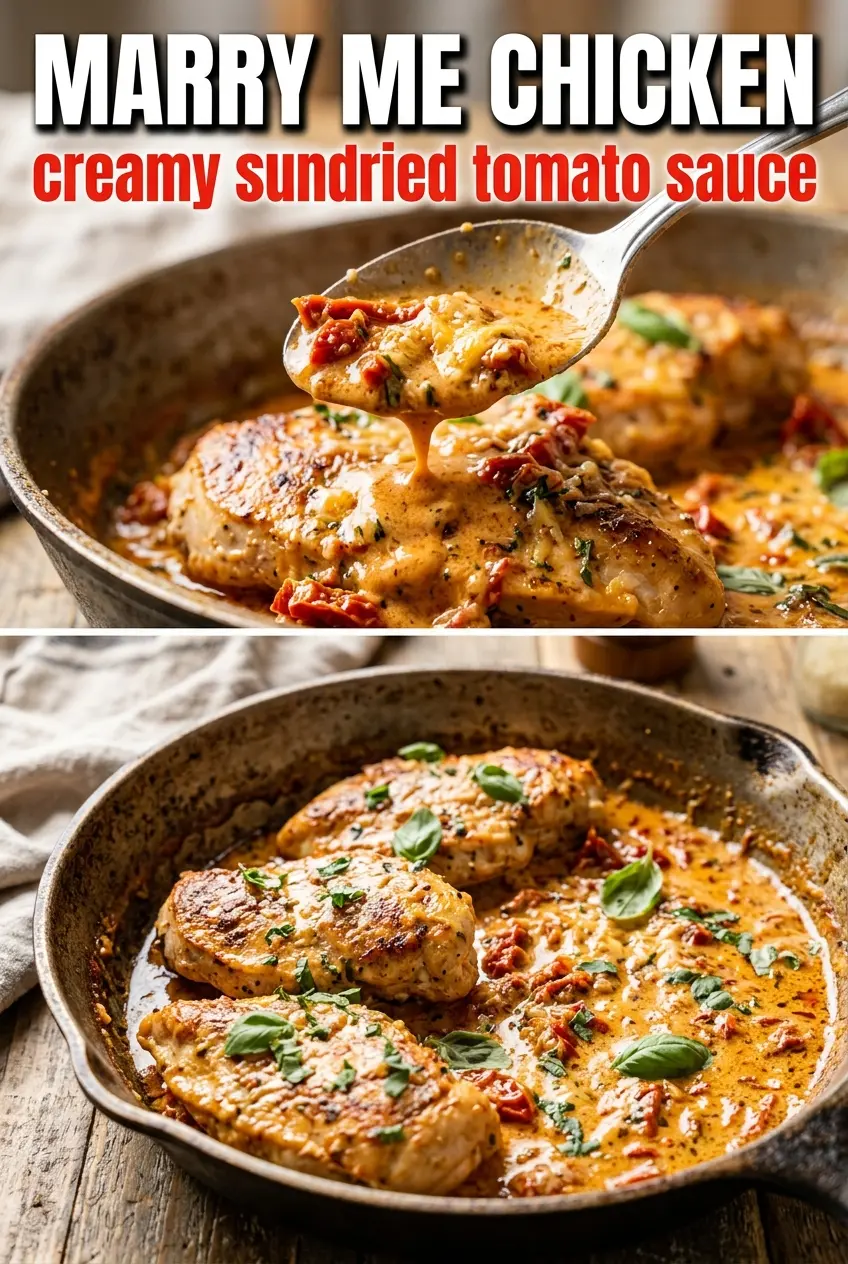
Marry Me Chicken
Ingredients
Equipment
Method
- Season the chicken breasts generously on both sides with your salt, pepper, garlic powder, Italian seasoning, and smoked paprika to taste. Heat olive oil in a large cast iron skillet over medium-high heat until shimmering.
- Place chicken in the skillet and sear 5-6 minutes per side until golden and the internal temperature reaches 165°F; remove to a plate. Keep the skillet hot for the sauce.
- In the same pan, cook garlic and sun-dried tomatoes for 1 minute to toast and release fragrance. Stir and scrape up browned bits from the bottom.
- Pour in chicken broth and deglaze, scraping until the pan looks glossy. Simmer just until slightly reduced, then proceed.
- Stir in cream, Parmesan, dried Italian seasoning, and red pepper flakes. Simmer 4-5 minutes until the sauce thickens and coats the back of a spoon.
- Return chicken to the pan and spoon the sauce over each breast. Simmer 2 more minutes until warmed through.
- Garnish with fresh basil and serve over pasta or mashed potatoes. Spoon extra sauce over the top so it pools thickly.