Golden seared chicken, smoky cumin broth, and melted cheddar are what make this Santa Fe chicken skillet land on the table looking like more effort than it actually takes. The chicken stays juicy because it finishes right in the beans, corn, and tomatoes instead of drying out in the oven, and the skillet picks up enough flavor from the sear to make the sauce taste like it simmered all afternoon.
What makes this version work is the order. The chicken gets a hard sear first, which builds a deep brown crust and leaves the good browned bits in the pan for the sauce. Then the beans, corn, and tomatoes cook just long enough to heat through and turn into a spoonable, slightly brothy base before the chicken goes back in to finish. That keeps the vegetables bright and the chicken tender.
Below you’ll find the small details that matter most: how to keep the seasoning from burning, why the broth amount is just right for a skillet sauce, and the best way to get the cheese melted without overcooking the chicken.
The chicken stayed juicy and the sauce thickened up just enough under the lid. I served it with lime and avocado, and my husband went back for the last scoop of beans and corn.
Save this Santa Fe chicken skillet for a fast Tex-Mex dinner with juicy chicken, smoky beans, and melted cheddar.
The Sear Is Doing More Than Browning the Chicken
The biggest mistake with a skillet chicken dinner is rushing past the sear. If the pan isn’t hot enough, the chicken steams and leaves you with pale meat and a thin sauce that tastes flat. A proper sear gives you a crust that holds onto the seasoning and leaves browned bits in the pan, and those bits are the backbone of the sauce.
Use a cast iron skillet or another heavy pan that holds heat well. If the seasoning darkens too fast, the heat is too high and the spices can turn bitter before the chicken is cooked through. You want a deep golden surface, not blackened edges. Once the chicken comes out, leave the drippings in the pan; that’s where the flavor lives.
What the Beans, Corn, and Rotel Are Doing in the Pan
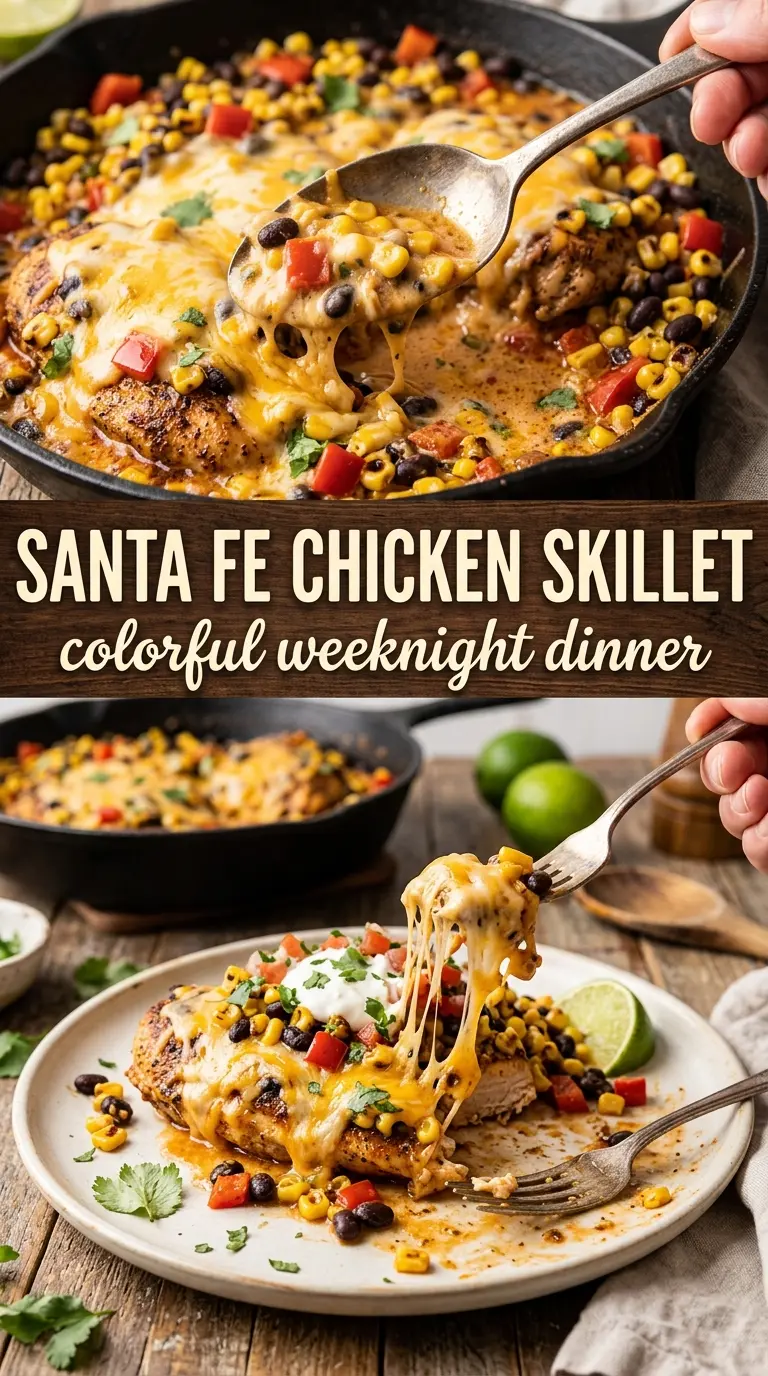
- Boneless skinless chicken breasts — These stay lean, so the short simmer matters. Thicker breasts cook more evenly if you pound them to a similar thickness first. That step keeps one end from drying out while the center catches up.
- Taco seasoning — This carries the cumin, chile, garlic, and salt that define the dish. Store-bought seasoning is fine here, but if yours is salt-free, add a little salt to the chicken before searing so the flavor doesn’t stay flat.
- Black beans — They thicken the skillet naturally and give the sauce something hearty to cling to. Rinsed canned beans are the right choice; using dry beans would require a different recipe and a much longer cook.
- Frozen corn — Frozen works better than canned because it keeps a little snap and sweetness. Add it straight from the freezer; thawing first just makes it mushy.
- Diced tomatoes with green chiles — This is the ingredient that gives the skillet its Santa Fe character. Rotel brings acidity, heat, and liquid all at once, which means you don’t need a separate tomato and chile component.
- Chicken broth — Just enough broth loosens the pan juices into a sauce without turning the skillet watery. If you use too much, the cheese won’t melt onto a cohesive base later.
- Cheddar cheese — Sharp cheddar melts into the best topping here because it brings enough bite to stand up to the smoky sauce. Pre-shredded cheese works, but freshly shredded melts smoother because it doesn’t carry anti-caking starch.
How to Finish the Skillet Without Overcooking the Chicken
Season and Sear the Chicken
Rub the chicken breasts with taco seasoning on both sides, then lay them into hot olive oil in a single layer. You should hear an immediate sizzle. If the pan goes quiet, it wasn’t hot enough and the chicken will release moisture before it browns. Let it sit undisturbed for 4 to 5 minutes per side until the surface turns golden and the meat lifts cleanly from the pan, then move it to a plate.
Build the Saucy Base
Add the black beans, corn, Rotel, and chicken broth to the same skillet and stir up the browned bits from the bottom. The liquid should come to a lively simmer, not a hard boil, because boiling drives off the broth too fast and can leave the tomatoes tasting sharp. This stage should look brothy and colorful, with the beans starting to thicken the liquid around the edges.
Finish the Chicken Under the Lid
Nestle the chicken back into the skillet and cover it so the steam finishes the center gently. Cook over medium heat until the chicken reaches 165°F in the thickest part, usually 8 to 10 minutes depending on breast size. If the chicken is very thick, keep the heat at medium instead of cranking it up; higher heat cooks the outside too fast and leaves the center behind.
Melt the Cheese at the End
Sprinkle the cheddar over the top and cover the skillet for just a couple of minutes. The cheese should melt into soft, glossy pools, not cook long enough to separate into grease. Pull the pan from the heat as soon as the cheese looks fully melted and the chicken is done, then finish with cilantro, sour cream, avocado, and lime wedges.
Three Ways to Make This Santa Fe Chicken Skillet Fit Your Table
Dairy-Free Skillet
Skip the cheddar and finish with avocado, cilantro, and an extra squeeze of lime. You lose the creamy melt on top, but the skillet still tastes full because the beans, tomatoes, and seasoned chicken carry the dish.
Make It Milder or Hotter
Use mild diced tomatoes with green chiles if you want gentle heat, or choose a hotter Rotel-style tomato if you want more kick. The rest of the method stays the same, but the heat level changes the whole feel of the sauce because it sits right in the liquid.
Chicken Thigh Swap
Boneless skinless thighs work well if you want a richer, more forgiving result. They need a little longer to finish through, but they stay tender even if you leave them in the skillet a minute too long.
Low-Carb Serving Style
This skillet already fits a low-carb plate without much adjustment. Serve it as is over cauliflower rice or alongside sautéed peppers if you want something under the sauce that still keeps the meal light.
Storage and Reheating
- Refrigerator: Store leftovers in an airtight container for up to 4 days. The beans will thicken the sauce as it chills.
- Freezer: It freezes well, though the texture of the tomatoes softens a little after thawing. Cool completely, then freeze in portions for up to 2 months.
- Reheating: Warm gently on the stove over medium-low heat with a splash of broth or water. The common mistake is blasting it in the microwave until the chicken turns tough and the cheese separates.
Answers to the Questions Worth Asking
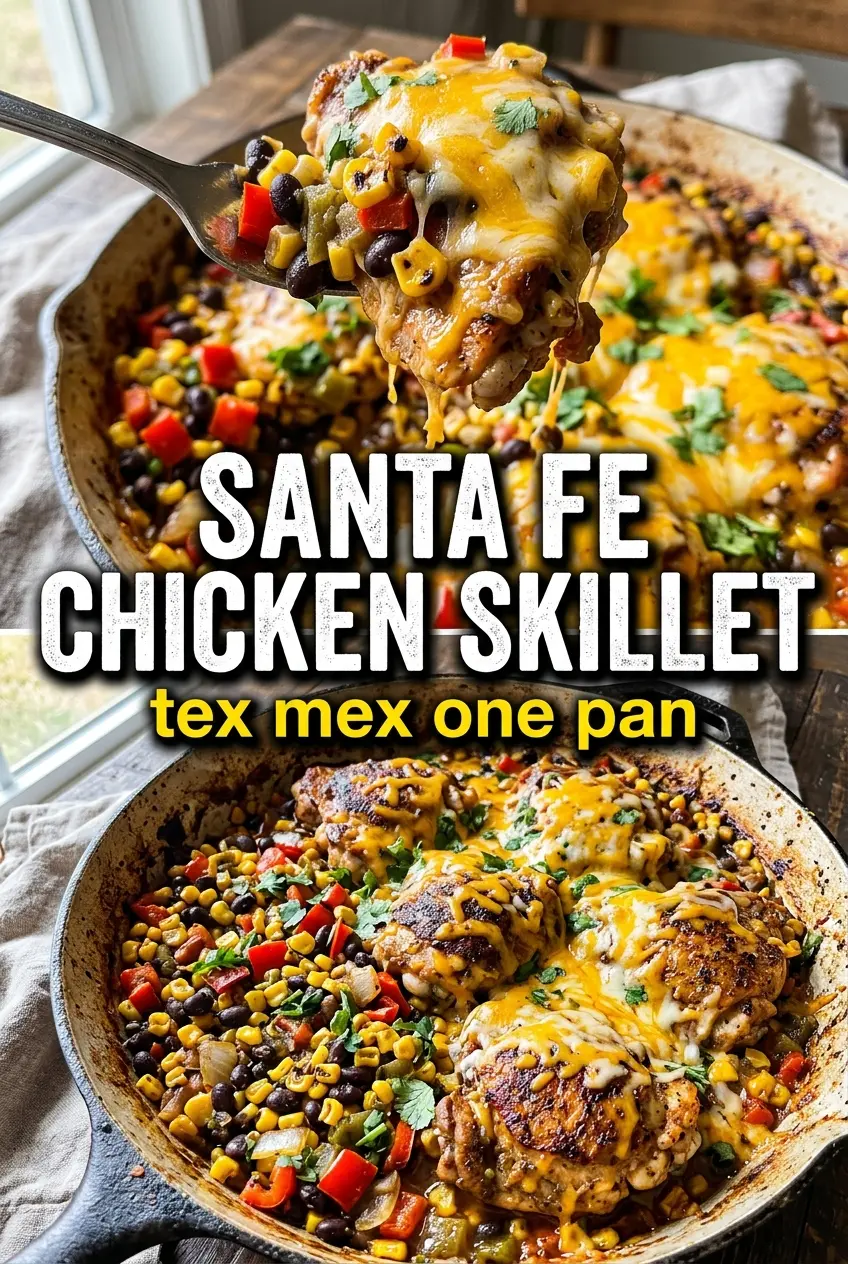
Santa Fe Chicken Skillet
Ingredients
Equipment
Method
- Rub the chicken breasts with taco seasoning on both sides so the surface is evenly coated.
- Heat the olive oil in a large cast iron skillet over medium-high heat and sear the chicken for 4-5 minutes per side until golden; remove to a plate.
- Add the black beans, corn, Rotel, and chicken broth to the skillet; stir and bring the mixture to a simmer.
- Nestle the chicken breasts into the bean and corn mixture, cover, and cook over medium heat for 8-10 minutes until the chicken reaches 165°F.
- Sprinkle the cheddar cheese over the top and cover for 2 minutes until melted.
- Garnish with cilantro, sour cream, avocado, and lime wedges before serving.